
The sun has had an exceptionally eventful year both with a solar eclipse that was one of the most widely viewed eclipses in North America. On top of this event, the sun is going through one of its stronger cycles wherein solar flares are hitting earth at magnitudes that have shut off tracking systems, satellites, and causing our technological infrastructure to flounder in its wake.
We are heading steadily toward one of the more powerful solar cycles we have ever recorded.
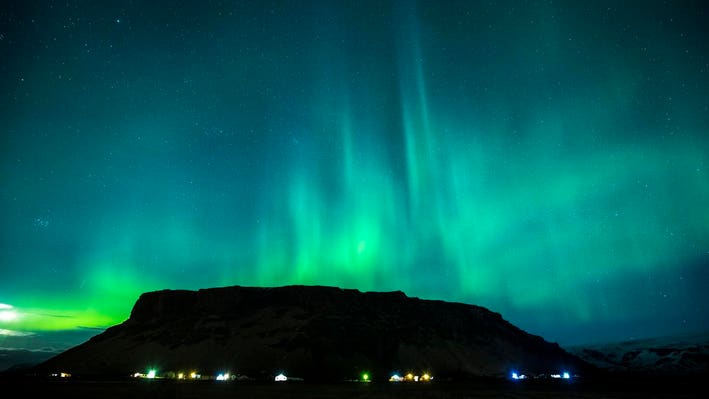
However, the beautiful part of this solar storm is the fact that we are able to view the northern lights (also called the aurora borealis) in places that are not normally viewable more frequently.
Back in May of 2024, several CME (or coronal mass ejections) hit Earth’s magnetic field such that people who live in places like Texas or Louisiana were able to view them. Several of these hit in rapid succession such that they kept coming.
You may be wondering why I am talking about solar weather on a blog about spirituality and religion. For one, like most cycles, the solar cycles also have the ability to affect life on our planet. Like most significantly changing climates in our world, the sun is always changing, too. Life on our planet depends on the sun for energy and survival.
My fascination with the northern lights has only more recently been awakened which got me to thinking about where they come from, how the ancient peoples in the North must have been inspired by them, and what it could possibly mean for the Norse pagans today. I’m going to be talking in depth about what I’ve discovered during my current obsession with the Northern lights and why this is so relevant to things I’ve been talking about on this blog.
The bifrost being a rainbow is probably a Christian construct.
I have personally never been to Scandinavia but based on the weather and climate, I would more than likely assume that rainbows were not necessarily a part of their more common weather displays. Rain happens, of course, but rain storms do not often form rainbows and they would not necessarily be as prominent.
Where the people who worshiped the Norse gods would have resided, there are only around 1200-1800 hours of sunlight per year. To put that in perspective, most states in the US have at least 2k-4k hours of sunlight a year. That is a significantly different experience with weather phenomena. In order for conditions to be correct in forming a rainbow, it would need to have formed within cloudy skies with rain.
Considering rainbows happen more often in warmer climates where there is a lot of sunshine to refract in the clouds, rainbows are likely not going to be as obvious nor considerable in Scandinavia as much as the aurora borealis. I would wager, in fact, that the Norse peoples were likely more attuned to the events at night rather than the events during the day.
To the Norse peoples, having fewer hours of sunlight would likely make them more keen on tracking what happens during the night. Considering there are periods of time where there are only 4-6 hours of sunlight and less in even further northern climates, night time was likely a period of the day the Norse were closest to rather than the daylight.
The bifrost is also translated in a way that is more like “beef roast.” “Bif” translates to “shaking” or “glimmer” while “rost” is a “stretch” or “road.” I am not entirely sure how many rainbows you have seen that move. If the Norse were taking inspiration from their direct encounters with nature to equate with their experiences of the Norse Gods, I sincerely doubt a rainbow would meet that description.
You can see a video of the northern lights in Iceland here:
As you can see, it does appear to look like a road that curves and moves. It disburses and then consolidates slowly through time. It glimmers in a way that a rainbow does not. Pillars are a defining feature of the aurora when they are directly overhead. You can see the pillars of light moving back and forth as the solar flares change as it hits our atmosphere.
It seems to me, like most religious aspects of the Norse people, the bifrost being interpreted as a rainbow is yet again another Christianized way of interpreting a subject. Rainbows appeared to Noah in the ark as a sign that Yahweh was with him. The bifrost, as is interpreted in the mythology, is seen as a sign that the Gods have made a path from Asgard to Midgard. It is easy to see how they could be misconstrued but for us in the modern day, looking at the nature surrounding the Norse peoples and how they might have interacted with their environment is likely more beneficial.
The aurora could have been a sign that the Gods have manifested on Midgard.
I have discussed previously some of the concepts that were derived based off of my experiences with the Divine and Their nature. Cycles play a major role in creating an environment that is more conducive to Divine manifestation. We see it in the seasons, weather, moon phases. But we forget that the sun also plays a major role in our atmosphere, as well.
The sun goes through most commonly 11 year cycles. They are punctuated by solar maximums and minimums. There are periods in history that sun cycles have played a role in the development of environmental change and disaster as well as human progress. From 950 to 800 BC, we see an example of this making a change on human demographics. Solar cycles ultimately play a role in the behavior of climate and weather which have caused more naturally inclined climate changes (prior to human interference in this process).
The weather has an effect on humans whether we realize it or not, be it storms of rain or snow or storms of the solar variety.
The strengthened aurora is a sign of heightened solar activity and can coincide with times of change and environmental crisis. The Gods become more prevalent during times of transition and change as all Divine beings are catalysts in some way. An important aspect of the Divine that is talked about in almost all cultures and religions is the fact that the Divine are beings of change and transition. If things are not evolving and remain stagnant, the Gods are not there.
When talking about Norse gods, the aurora would have been an excellent testament of the Gods’ manifestation on Midgard.
Solar energy, like other energies, can create environments more conducive for the Gods to cohabitate with humans. During these strong solar cycles – like the one we are seeing now – change is afoot. We have seen it in our weather, in our political climate, in human behavior. People are shifting and times are changing.
And when you think of it, all cultures somehow used the sky and the bodies in it to make meaning out of changes and cycles. Periods of time are defined by the moon cycles just as much as they are where Pluto is in conjunction with Saturn. The Norse people are no different. When human beings are in direct relationship with the world around them, they likely took a lot more notice as to the changes occurring around them, there the aurora is, how strongly it is in the sky.
One common theme that the Norse gods are most known for is the fact that They are more familial, common, and domestic. They were likely more involved in the day-to-day mundane rather than in rituals and other structured events like the Greek and Egyptian pantheons. The aurora, too, was most often seen throughout the year in Scandinavia, regardless of the time of year – though more prominently in the fall and winter into early Spring which are widely known to be the more liminal parts of the year even outside of Scandinavia. This creates an excellent environment for the Gods to “travel” and to use the lights to Their benefit to manifest, create, and be among the people who worshiped Them.
The darkness is inherently liminal. We see this everywhere. The Gods work in times of liminality and manifest more prominently there. Based on the fact that the Scandinavian countries had lives based in the dark, it is likely they had much more interaction with the Norse Gods on a more personal and deeper level than most people assume.
What does this mean for modern practitioners?
Keep an eye on the Northern sky. Today, 10/5 into 10/6 UTC (you can find a calculator for that here to your time zone), two of the strongest solar flares in recent history are going to make contact with the earth’s electromagnetic field, making it possible for us to see them in places we do not ordinarily get to. Yes, even outside of the Northern countries.
Keep an eye on a couple factors. I recommend looking into apps like the Glendale app and other data-based apps for an understanding of when the aurora might be more prominent in your area. If you are in the southern hemisphere, it can be a little different but ultimately the same reaction to the sun’s cycles as it is here in the northern hemisphere. A lot of aurora apps use measurements like Kp to understand when there is a more probable chance and stronger chance of seeing an aurora. However, those measurements are inaccurate as multiple factors come into play. The Glendale app can walk you through the different variables and rationalize when and how a CME might take effect.
This is not just today, however, as we are steadily moving towards the solar maximum in Solar Cycle 25 which will reach a climax from right now til the end of 2024 and into 2025 and wanes in 2026.
This is an excellent opportunity for us who do not reside in the Northern countries to make a point in tracking these shifts in energy. If you are particularly sensitive to more subtle energies as well as not-so-subtle, this is a fascinating time to see what could happen.
I have made a few more prominent metaphysical observations during my time (obsessively) hunting the lights in recent months:
- I can begin to tell intuitively when the lights are stalling as well as when they might be present. When the camera is giving me blank skies, I have learned to pick up on when they are near and when it is time to pick up and leave for the night.
- I have been able to intuitively identify when a flare is coming by the way in which the energy picks up around me. The 2-3 days following are always particularly vibe-y until its arrival which then makes the energy even more palpable.
- I have even been guided where to point the camera in the moment the lights appear which have given me some interesting shots and things to make me go “hmm.”
If you go aurora hunting, here are some tips:
- Be sure to take a charged phone or camera. You may be out for a bit.
- Go as far away from light pollution as possible.
- Bring a buddy. It’s very dark out there. If no buddy, make sure you know where you are should wildlife (or less than savory humans) are also lurking.
- Be flexible. Forecasts change within 30 minutes as we have the most accuracy 30 minutes prior to the CME landing. Sometimes it may mean you’ll be hanging out outside for a few hours.
- Tripods are also recommended so you can get a better length of exposure. Typically any time between 5 and 30 seconds is best for seeing them. If they are extremely faint, putting the processing at the highest saturation is going to give you some idea.
- Most people, should they be far away but close, will see a faint red glow on the horizon denoting the presence of the lights. Most people further south will see anything from red to green and purple, but the closer you are, the more vibrant colors there will be.
- Look towards the northern horizon. I’ve also seen them appear on the northwestern and northeastern horizons, as well, depending.
- Using more accurate apps like the Glendale app will assist you on timing and whether or not you want to put pants on at 2am to go look.
- Conditions typically need to be clear from clouds and debris in the sky.
- If you are near farmland or even along ridges in mountainous regions, those are most likely better places but there are also lists of international dark skies you can find close to you at home which you can find here.
- Finding Facebook groups with people close to your region who are taking pictures is also helpful if you don’t feel like waiting around multiple hours in the darkness. This is gaining traction in popularity given the recent activity and the fact that most people have handheld devices that can more easily see these lights. It’s always likely been possible, but now it is more obvious to the everyday person.
Tracking things like this is also a good way of getting more involved with the environment and climate. Even though this blog is Norse pantheon-specific, I recommend anyone giving it a try and seeing what they find both physically and non-physically.
Prepare for trial and error as well as disappointment but I can assure you that it is worth it and it is actual magic when it happens.
If you go, let me know what you find and if you have any metaphysical experiences that coincide with your hunt.

 Devoured by Flame
One response to “Aurora Borealis: Norse Myths and Solar Connections”
[…] In my last post, I wrote about my theory that the Northern lights are what the ancient peoples thought were the bifrost. The energy from the lights were likely enough to sense the Gods and to assist in Their manifestation here on Midgard because of it being a bridge from Asgard to here. […]
LikeLike